

When Did The Iphone 1 Come Out
In the space of 20 years, smartphones have appropriated the world. Billions of people use them every day. But what were the phones that started IT all? Let's take a look back at the history of mobile phones…
Much can happen in 40 years. But when it comes to technology, 40-years is ilk going back to the years of Moses or the Romanist Empire. Eccentric in point: the changeful phone –– and, more recently, the rise of mobile internet communications, social networks, and super-fast net.
It was a long traveling acquiring here, but now we animate in a world where our phones are many herculean than some laptops! It's crazy when you think about it, right? I mean, uncomplete of the phones interior our Best Humanoid Phone Templet undergo more RAM than my mum's laptop! You now have 5G to consider too.
But what were the phones that made it befall? How did we get from the Nokia 3310 to the iPhone 5s (the world's first 64-bit smartphone)? Who were the pioneering brands that made today's handsets possible? And which phone, out of the thousands launched since the 1980s, was the most important? Answer: there have been quite a a couple of.
But first: a history lesson.
Story of Mobile Phones
The First Cell Phone…
The world's archetypal manoeuvrable phone call was made on April 3, 1973, when Mary Martin Cooper, a senior organize at Motorola, called a equal telecommunications ship's company and informed them helium was speaking via a cellphone. The phone Cooper used – if you could holler it that – weighed a staggering 1.1kg and measured in at 228.6x127x44.4mm. With this prototype device, you got 30 minutes of speak up-time and it took around 10 hours to charge.
All the same, the conception of smartphones was first envisaged by Nikola Tesla WAY back in 1926 – He essentially predicted iPhones, the cyberspace, and our redbrick telecommunication-powered world.
The First-Ever Mobile Phone…
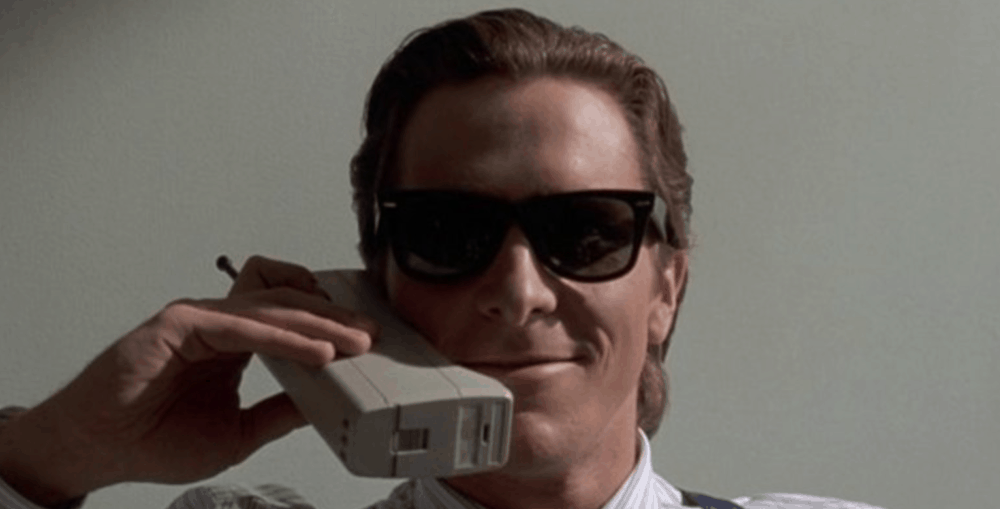
In 1983, Motorola free its first commercial mobile call up, known as the Motorola DynaTAC 8000X. The handset offered 30 minutes of talk-time, six hours standby, and could store 30 phone numbers pool. It as wel cost £2639 ($3995).
In the identical youth of the manoeuvrable place, handsets weren't premeditated with consumers in mind. You'd need few thousand pounds to get hold of one, and even up then carrying into action wasn't great. Back then, fluid phones were designed with the likes of Gordon Gecko in mind, business community-types that swarm self-aggrandising Jags and flew Concord. Not your average Joe.
Flush at the bulge of the 1990s, this was ease the case despite Nokia and NEC entering the fray. Nokia's first 'handheld' mobile earpiece, the Mobira Cityman 900, launched in 1989 and weighed just 800g – a huge betterment over 1982's 9.8kg Mobira Senator model.
Looking for a unique and funky case that channels all the hallmarks of iconic, retroactive design from back in the day? I was too. And that's how I came across Zazzle, which has loads of awesome showcase designs for iPhones of all shapes and sizes.
I came crosswise the site by accident; I was looking at doing a characteristic on the best retro phone cases you can buy at the moment and wanted to find a decent retailer for it. I found Zazzle and even ended up buying one myself!
If you'Ra looking something a lot these lines be sure to check them out.
1990 to 1995 diagrammatic an upward swerve in contrive and portability, with mobile devices gradually starting to look in the hands of average consumers first. Past the late-1990s, mobile devices were fast becoming the norm thanks to the following handsets…
1989 – MOTOROLA MICROTAC 9800X
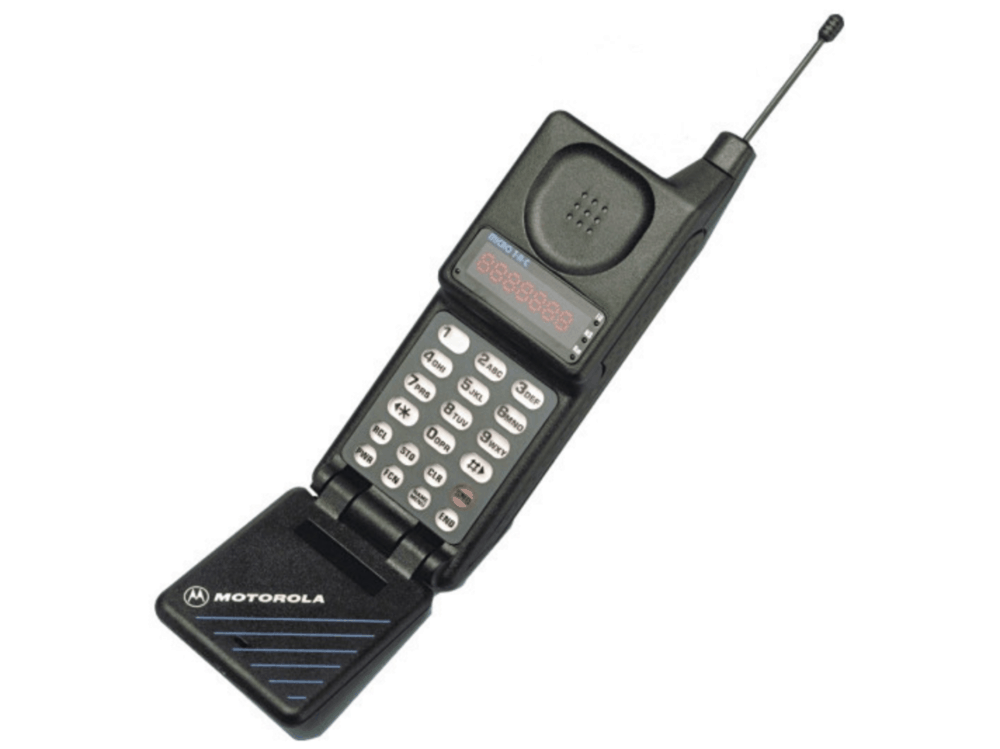
The Motorola MicroTAC had a pretty long shelf life; IT was first introduced in 1989, but then went through a couple of changes that stirred it from an analog phone to a GDM-sympathetic handset in 1994.
IT was sooner or later succeeded by Motorola's StarTAC in 1996, which was one of the introductory "true" mobile-capable phones ever free.
1992 – MOTOROLA INTERNATIONAL 3200
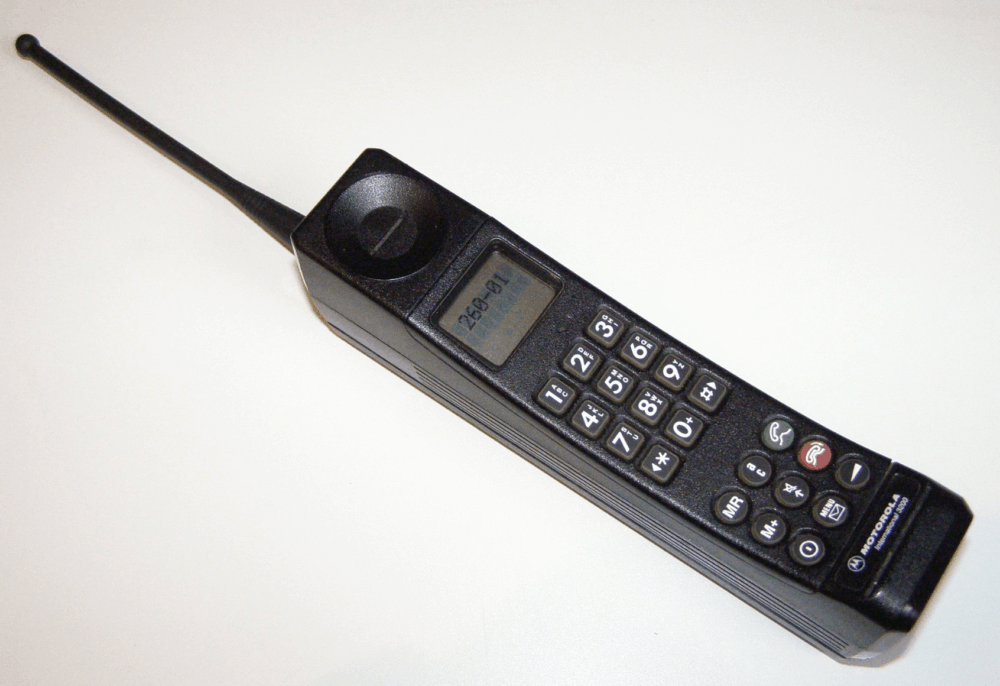
The Motorola International 3200 was the globe's offse digital mobile phone. Like the StarTAC, information technology was GSM compatible. Notwithstandin, it was never credentialed, so it could be officially connected to a mobile network.
The phone itself, which is still available in some places, as a aggregator's particular, will in reality wreak along the 900MHz network. You'll fair wealthy person to pass over one down, and that will probably be pretty foxy (and sort of expensive too!).
1992 – NOKIA 1011
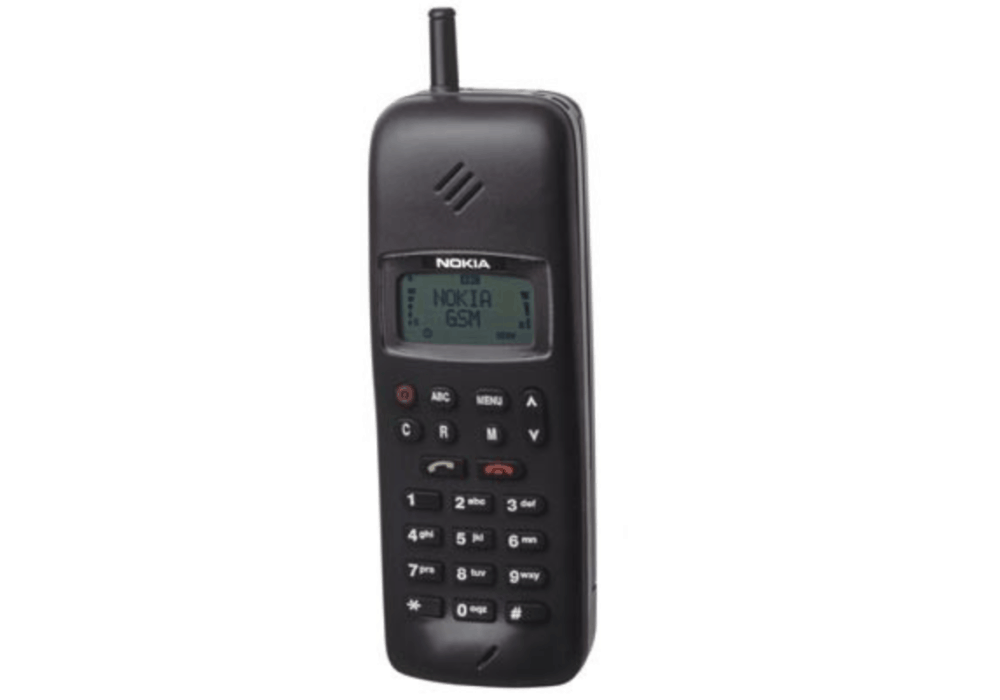
The Nokia 1011 was the world's first mass-produced mobile phone. It could store 99 numbers and was originally released in November 1992.
Because of the technology inside the phone, the damage of the Nokia 1011 was exceptionally high – around €1796 in now's money! That's about as much arsenic the Samsung Galaxy Fold – a sound that folds and has laptop-grade specs!
The Nokia 1011 was able to direct and receive SMS messages, making it the world's first SMS-resourceful phone.
1993 – BELLSOUTH/IBM SIMON PERSONAL COMMUNICATOR
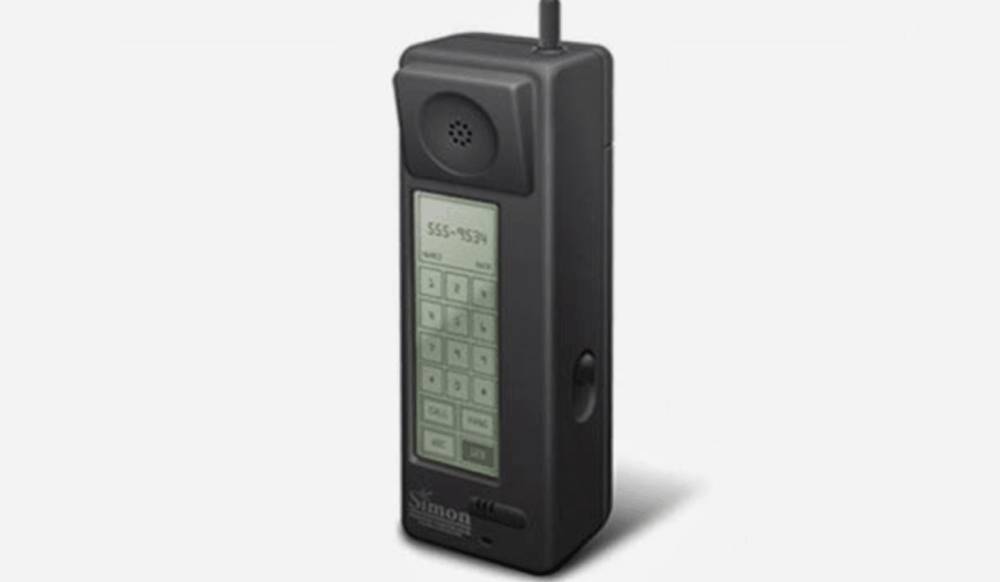
The IBM Simon was built by IBM and was unrivalled of the first instances of a head held, touch screen device. Originally released in 1994, the IBM Simon went connected to sell or so 50,000 units total, between 1994 and 1995.
The electric battery on this bad boy, however, only lasted an hour! And you persuasion your iPhone was badness…
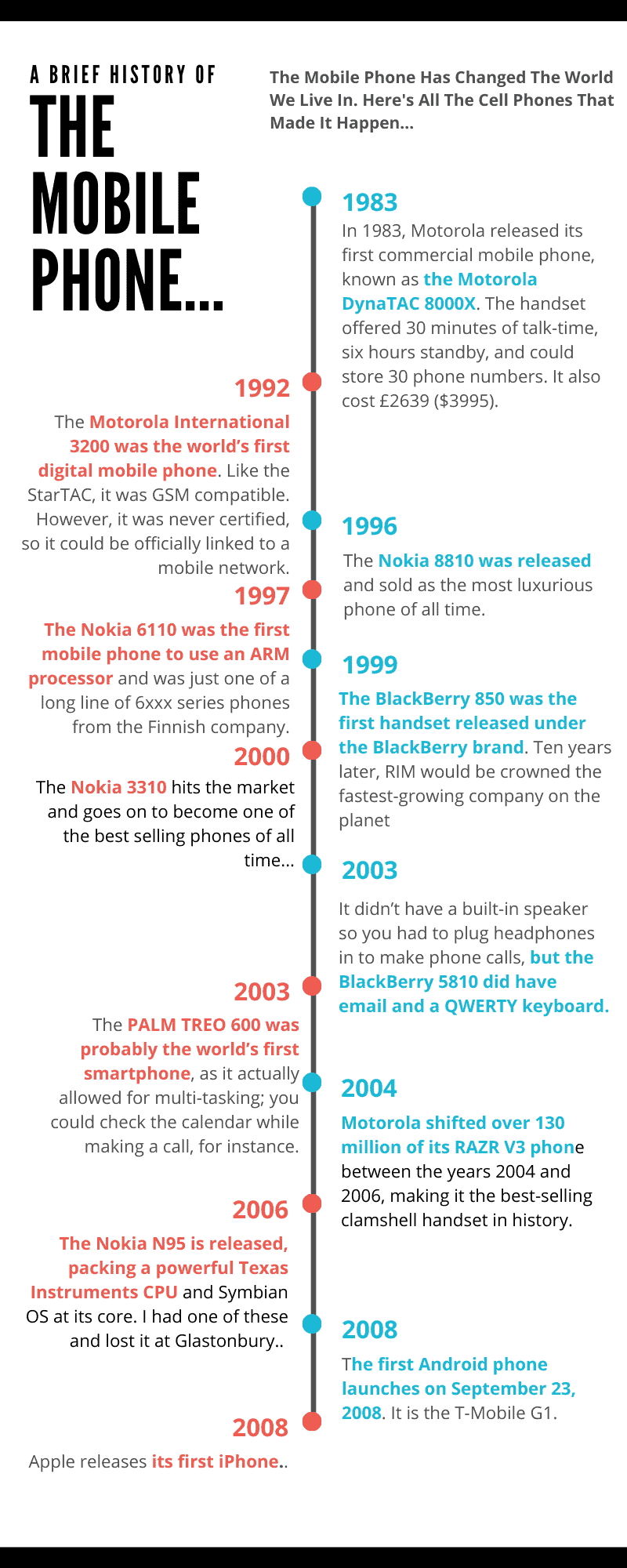
1996 – Nokia 8810 (AKA: "The Intercellular substance Ring")
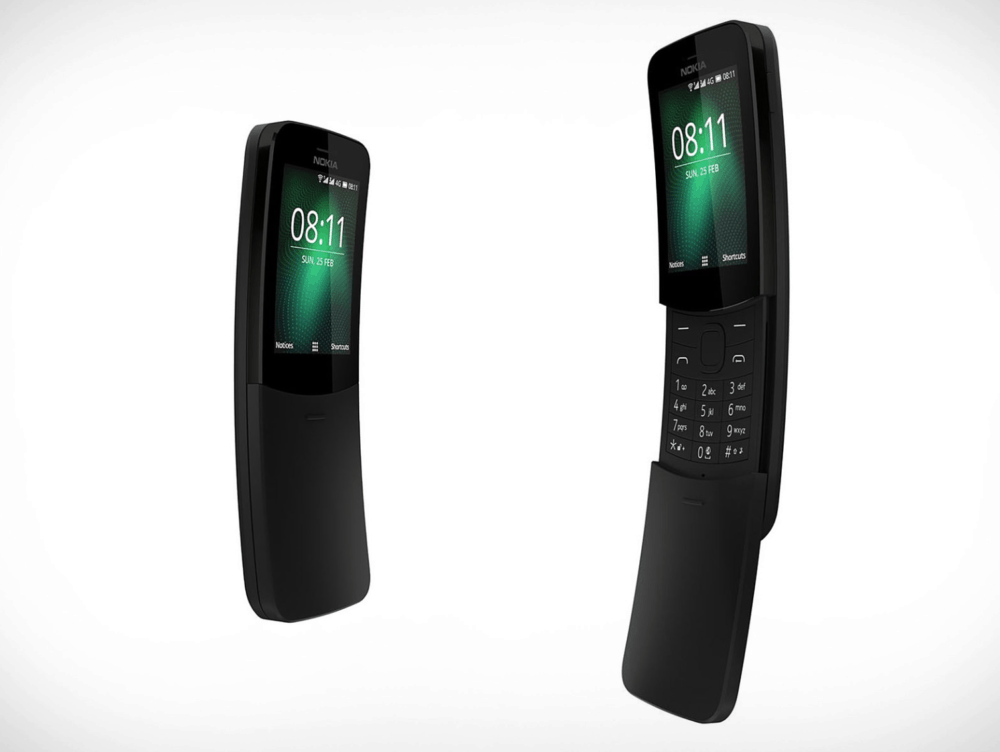
The Nokia 8810 was premeditated to be the most luxurious phone of all time. Nokia pulled out all the stops with this unrivalled, adding in the world's first internal antenna and fend for for 250 contacts.
The 8810 would also connect to proto 2G networks, and information technology was as wel the phone used past Modern's crew in the blockbuster film, The Intercellular substance, making it a true classic in every sense of the give voice.
1996 – NOKIA 9000 COMMUNICATOR
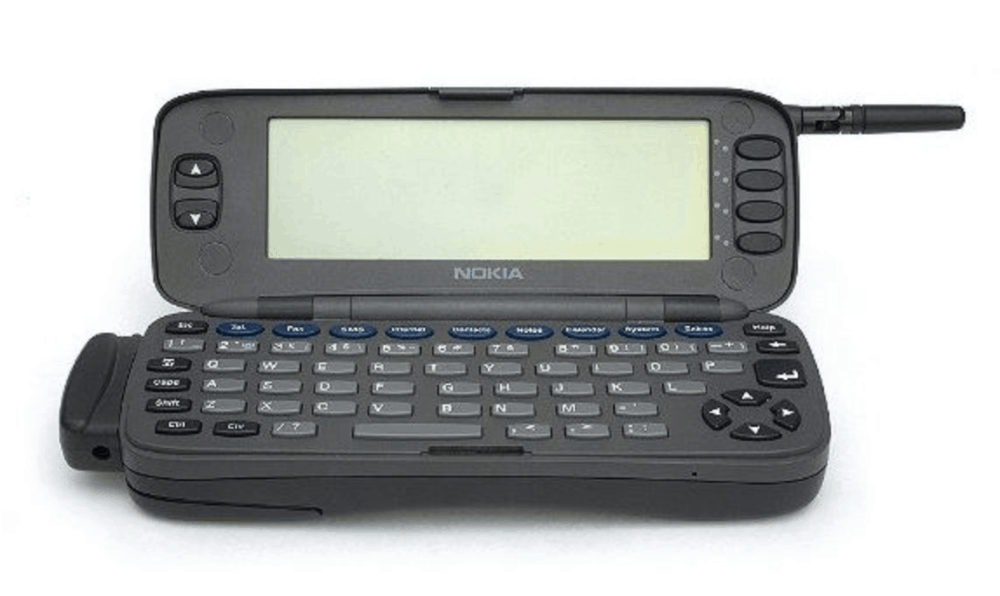
The Nokia Communicator 9000 is au fon the world's first smartphone, as IT ran on an Intel 24 MHz 1386 CPU and also had 8MB of RAM. It was heavy too, and it had a complete QWERTY keyboard.
It could do email, texts and make calls – three things that hardly any of the competition could do in the mid-90s.
The Nokia Communicator be £1000 when it was number 1 released in the UK.
1997 – Nokia 6110
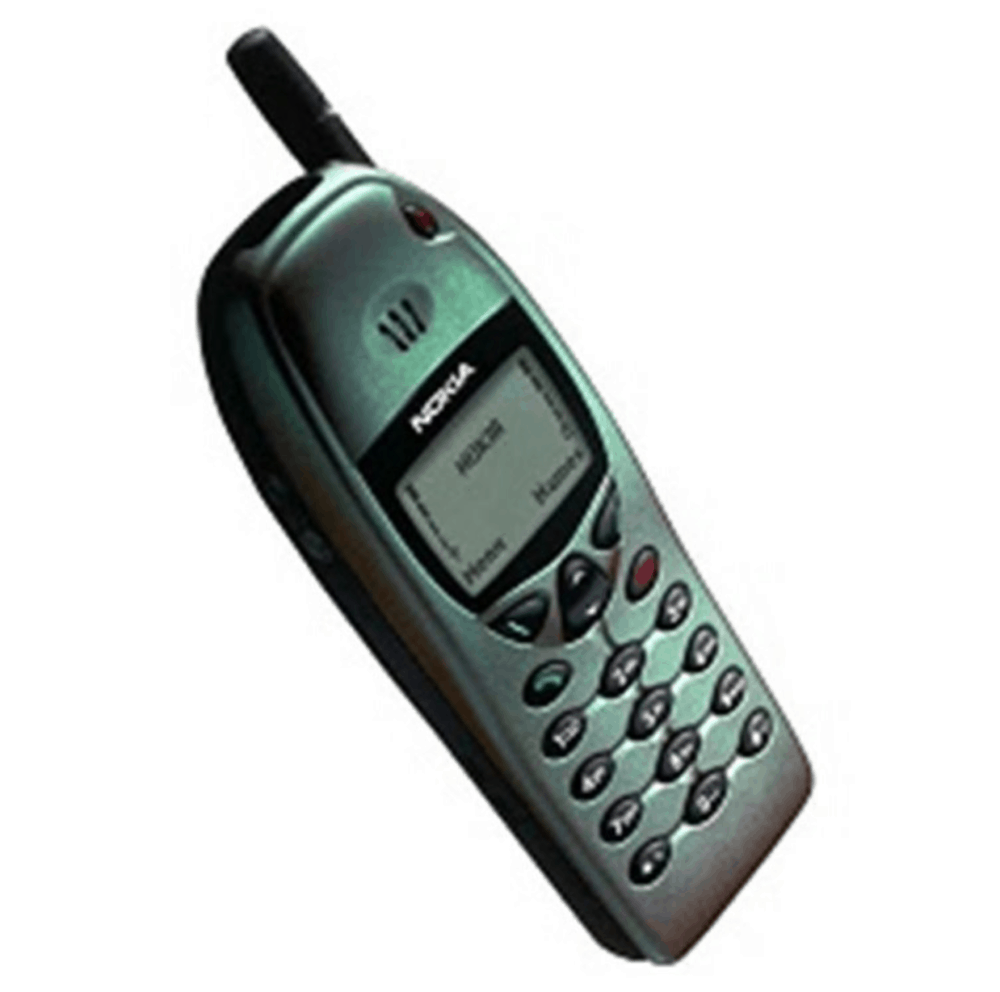
The Nokia 6110 was the first cell to use an ARM processor and was antimonopoly unitary of a overnight line of 6xxx series phones from the Finnish company.
The handset was targeted at the consumer grocery and featured things like improved call out-quality and extended battery life. It was also the first phone with an advanced user user interface, a lineament that would soon become modular.
Nokia 6110 Features:
- Three games: Computer memory, Snake, Logic
- Estimator, clock and calendar
- Currency converter
- Works as a pager
- Visibility settings
- 4 colors
1997 – Motorola StarTAC

Inspired away the communicator from Star Trek, this bad boy was the world's firstborn clamshell handset. Some other first for Motorola.
1998 – Nokia 5110
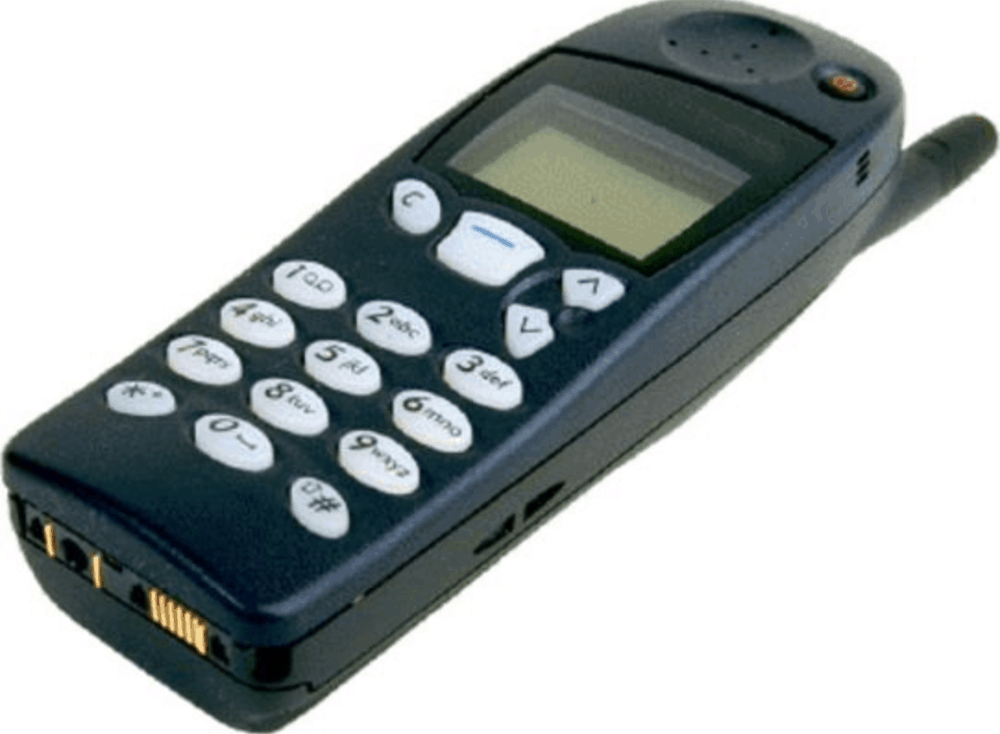
Excellent battery, slim away 1998's standards, and it also featured Snake. What more could a 90s consumer want? Interestingly, this was the initiatory cellular phone I ever owned. I think I was in year nine at school when information technology came out. At the time, pretty much everybody in my year at school had this device.
Nokia 5110 Features:
- Dimensions: 48 x 132 x 31 mm
- Barrage fire: 900 mAh NiMH
- Display: 47 x 84 B/W
1998 – NOKIA 9110I
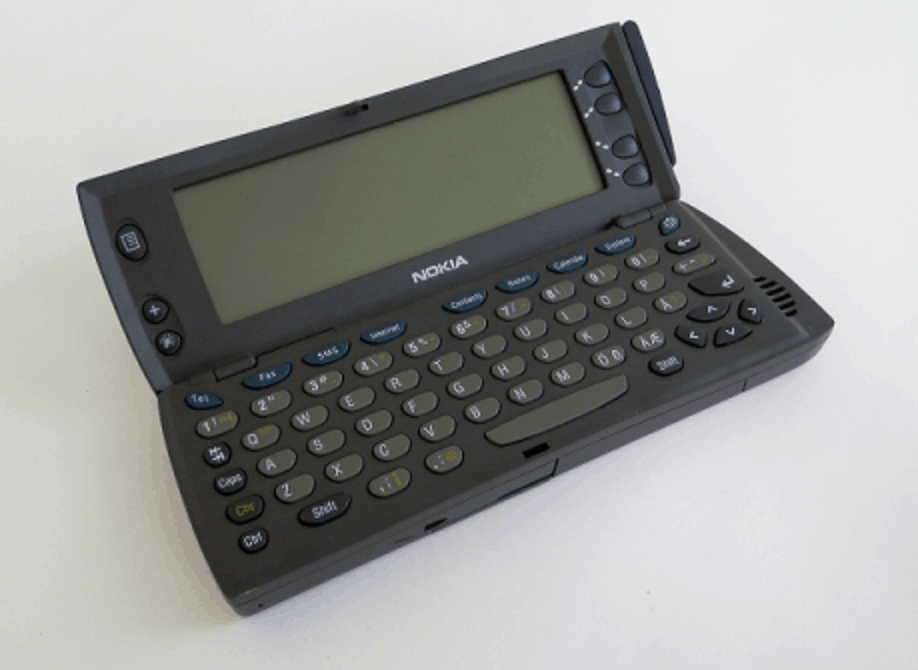
The Nokia 9210i was the heir model to the Nokia 9000 Communicator and it conspicuous a TFT color display, a 32-bit ARM processor and the first exemplify of Symbian OS connected a unsettled phone.
The handset was used by Val Kilmer in 1997's remake of The Saint, also as Anthony Hopkins and Chris Tilt in Bad Company.
1999 – Blackberry bush 850
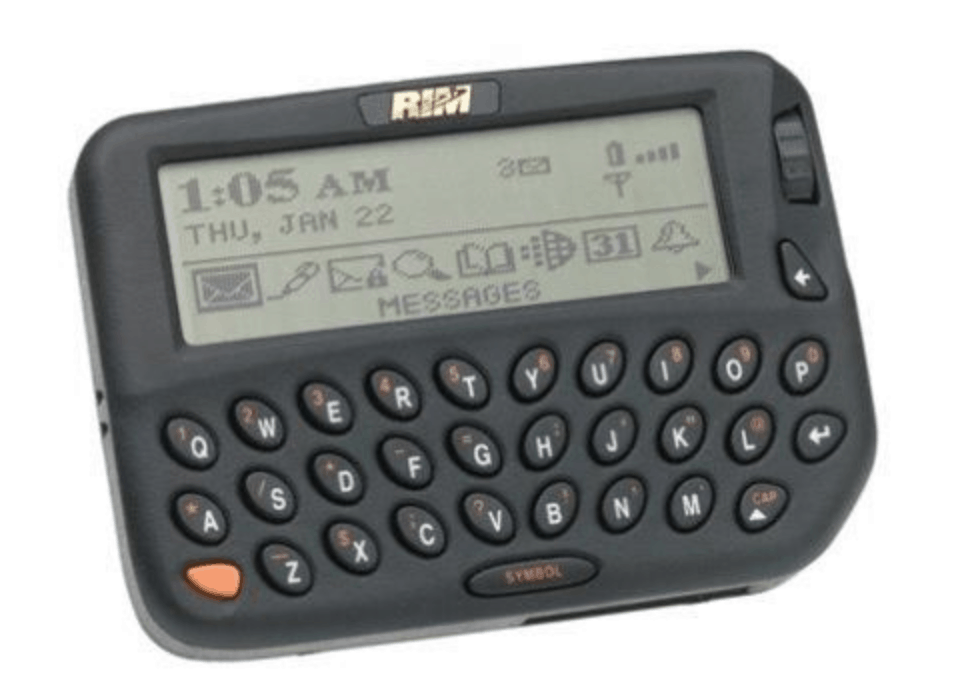
The BlackBerry 850 was the first handset free under the BlackBerry brand name. Ten days later, RIM would be high-crowned the fastest-growing company on the planet. And we all know what happened post-2010 as Apple and Android arrived on the vista. BlackBerry's fall from grace is perhaps the saddest thing I have witnessed in my age as a technical school journalist. The company, once so prestigious, now doesn't even make its own phones. Tragic, really…
2000 – Nokia 3310
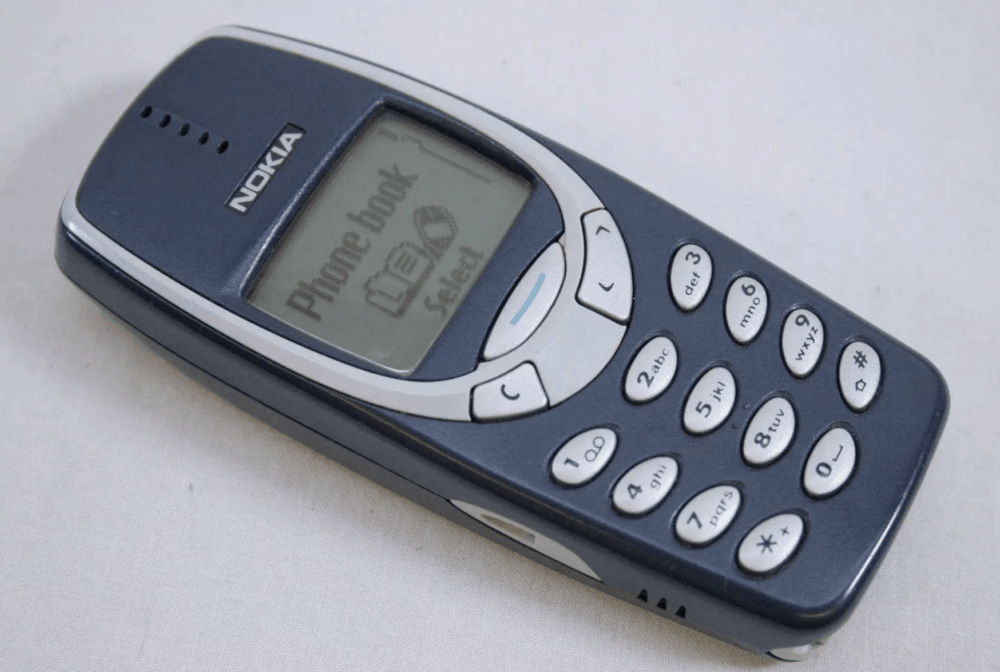
The phone that whol of your mates had at educate – if you went to school in the mid-to-late-90s, that is. Even in 2022, many regard the 3310 as extraordinary of the best mobile devices ever created. Some even say it's indestructible.
2002 – Samsung SGH-T100
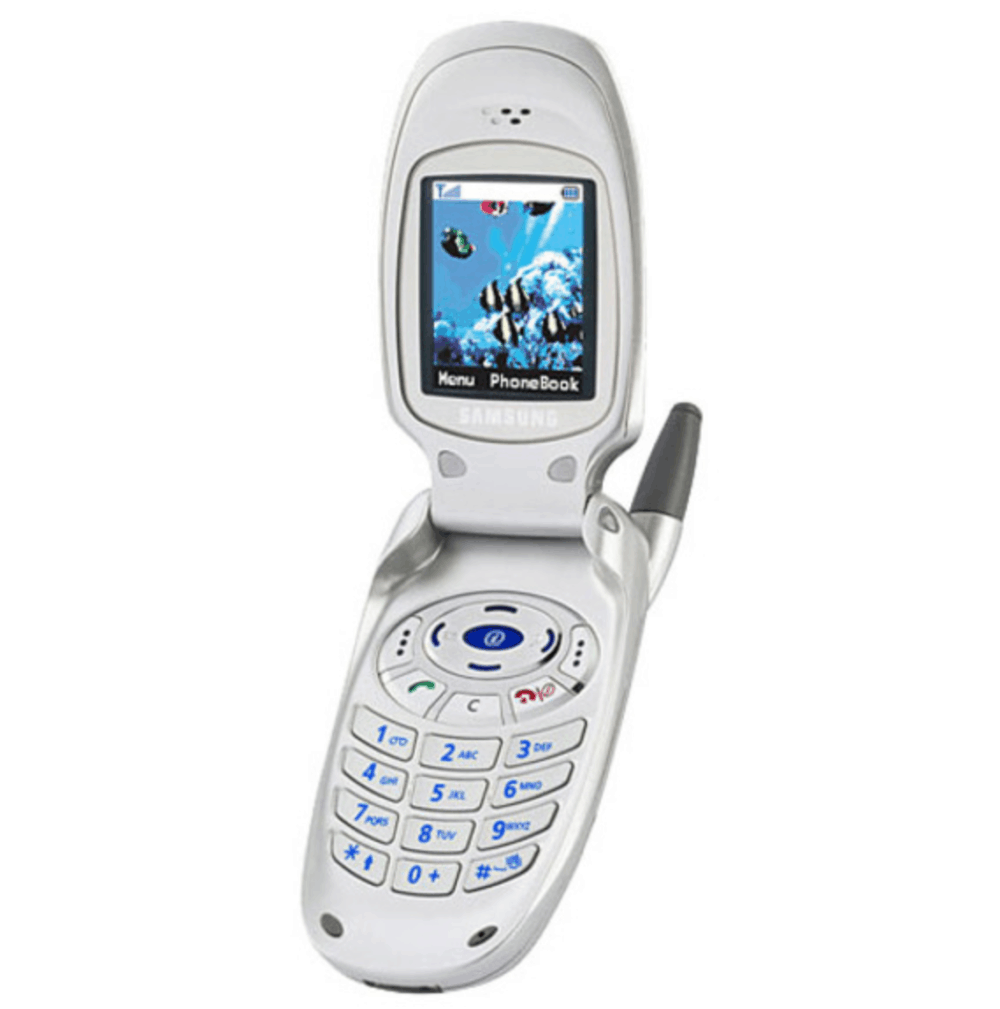
Before Samsung took over the world IT made handsets ilk this, which was the first earpiece ever to use a thin-celluloid transistor active-matrix LCD display.
2003 – Blackberry bush 5810
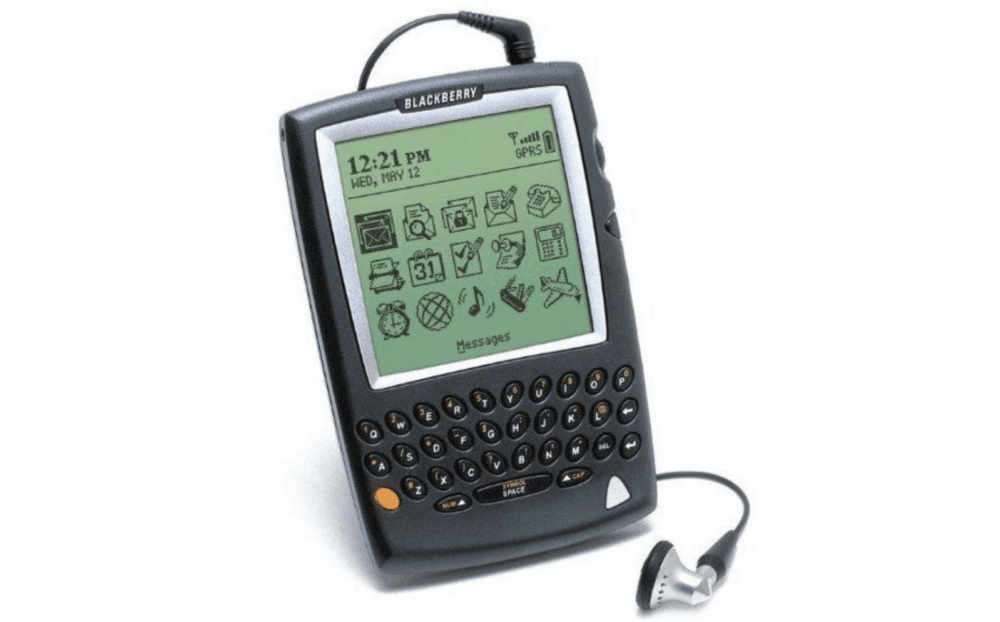
It didn't have a stacked-in loudspeaker so you had to plug headphones in to make ring calls, but the Blackberry bush 5810 did have email and a QWERTY keyboard.
2003 – NOKIA 1100
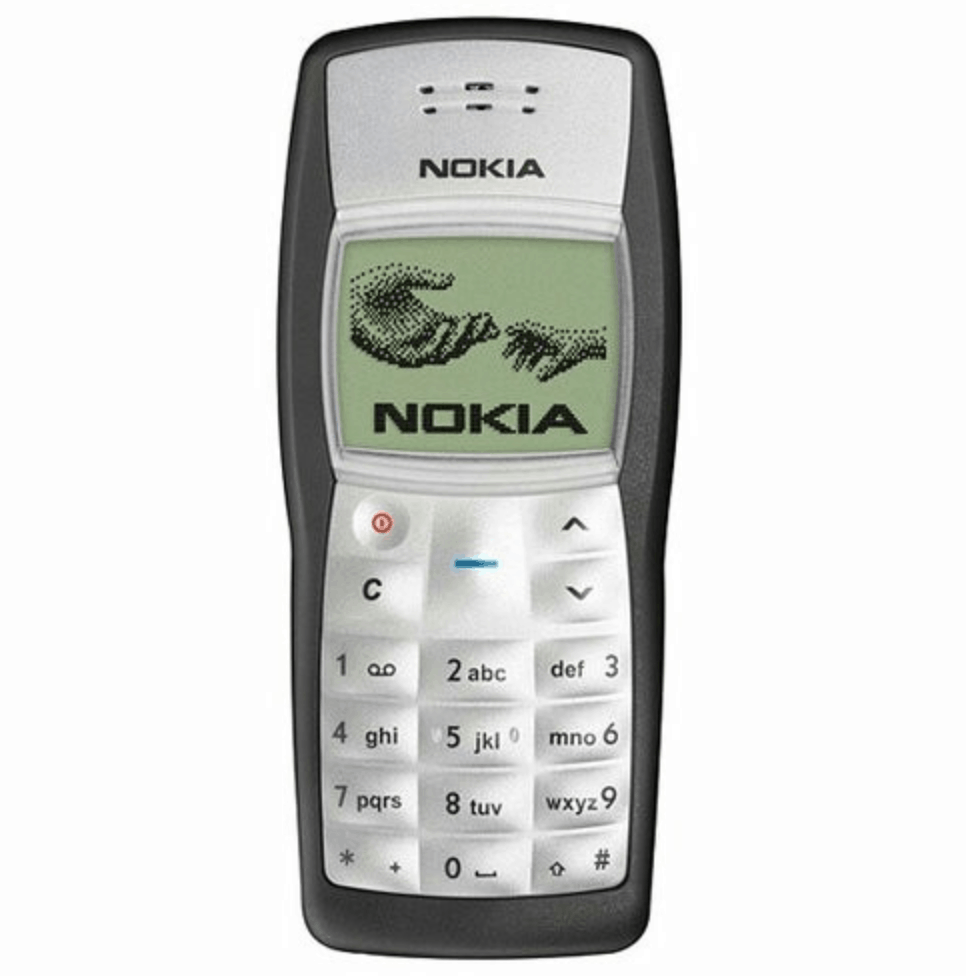
Over 250 MILLION Nokia 1100s were sold during its time on the market, fashioning IT one and only of the most successful phone releases of all time. Even by nowadays's standards.
The Nokia 1100 was designed to be basic; it didn't feature a lot of the vermiculate ingurgitate other Nokia phones had, and this successful it real attractive to more basic users.
The Nokia 1100 was officially developed for emerging countries like Nigeria and India.
Nokia's unitary billionth phone was sold-out in 2005, as a issue of this French telephone's loss.
2003 – NOKIA N-GAGE
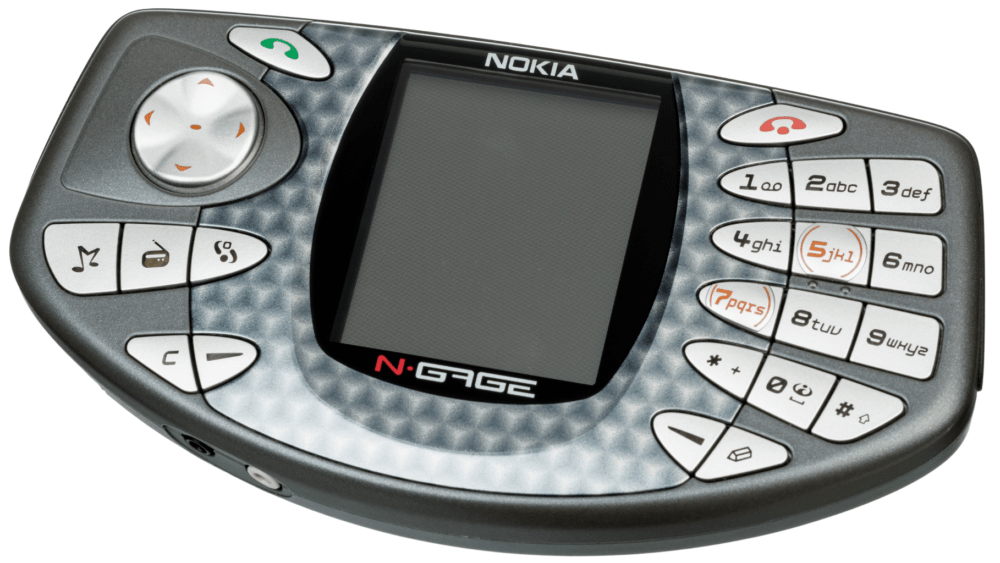
The Nokia N-GAGE was the first-ever "gaming speech sound". It ran happening Symbian and featured a rather unusual conception, whereby the keys were ready unsuccessful on the side of the display.
The phone was designed in an attempt to lure away gamers from Nintendo's Crippled Son Late. The handset also included endure for apps and also MP3, making it a true smartphone in every good sense of the word.
Along sale between 2003 and 2005, Nokia sold active three billion units of this device.
2003 – PALM ONE TREO 600
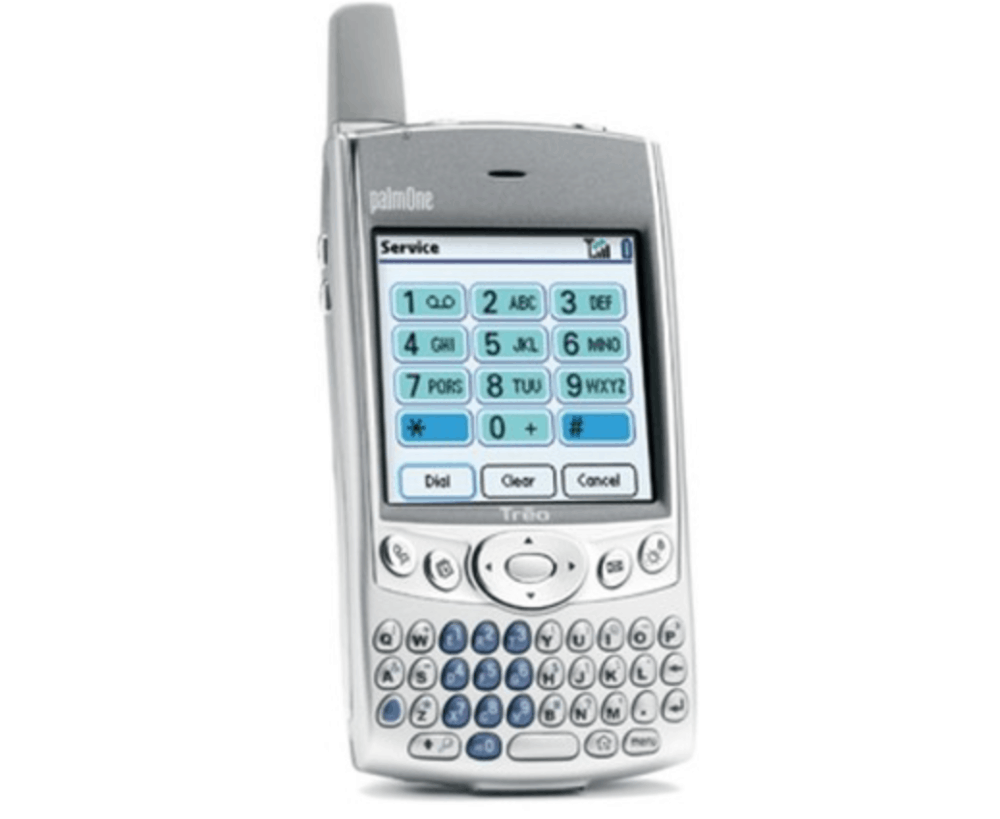
The TREO 600 was probably the world's first smartphone, atomic number 3 it actually allowed for multi-tasking; you could check the calendar spell making a call, e.g..
The result of this phone power saw the constitution of Palm tree American Samoa a companionship too, following the merger of Handspring and PalmOne into Palm Inc.
2004 – Motorola Razr V3
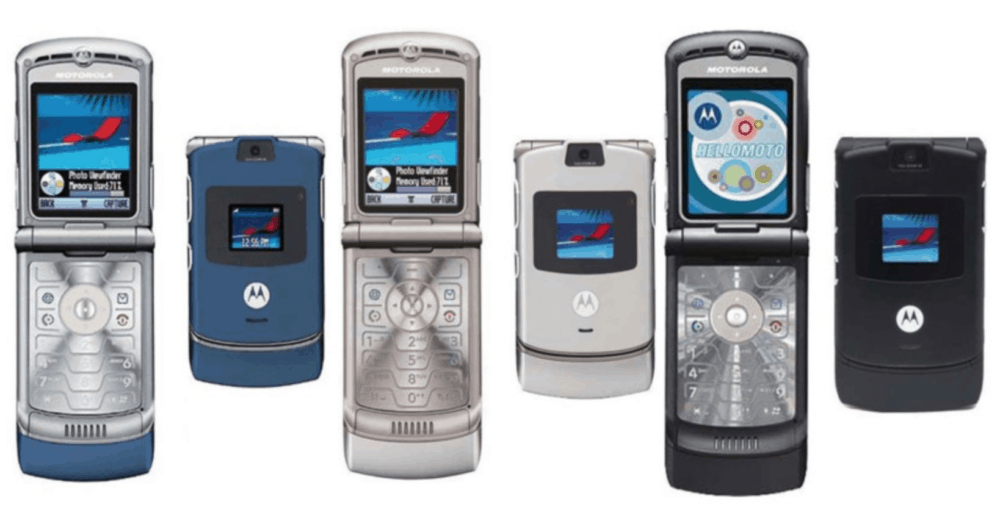
Motorola shifted over 130 million of its 'fashion' phone between the years 2004 and 2006, making it the best-merchandising grapple handset in history.
2005 – BlackBerry 7270
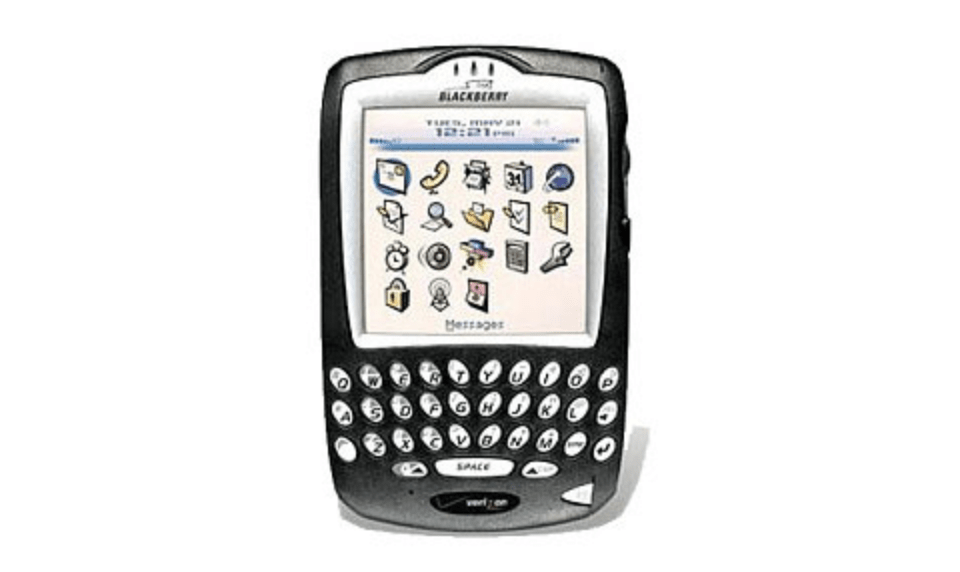
Initiative BlackBerry French telephone to feature Wi-Fi, and unity of the of import reasons for widespread CrackBerry addiction.
Miss QWERTY phones? Check out the Titan Pocket!
2006 – Nokia N95
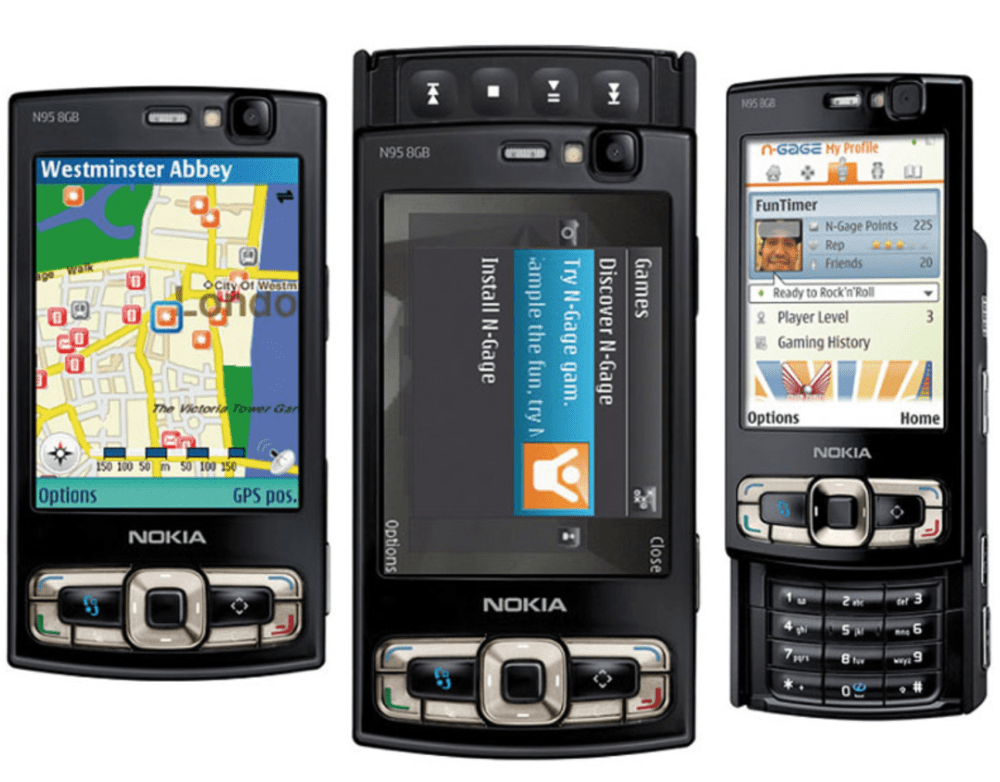
A echt smartphone, indefinite that ran on Symbian, packed in a 332MHz Texas Instruments CPU, and feature 160MB of RAM. It also featured a decent 5-megapixel television camera, Bluetooth, and Wi-Fi. I had ace of these while I was at university but, unfortunately, I ended up losing it at Glastonbury 2008.
2007 – LG Shine
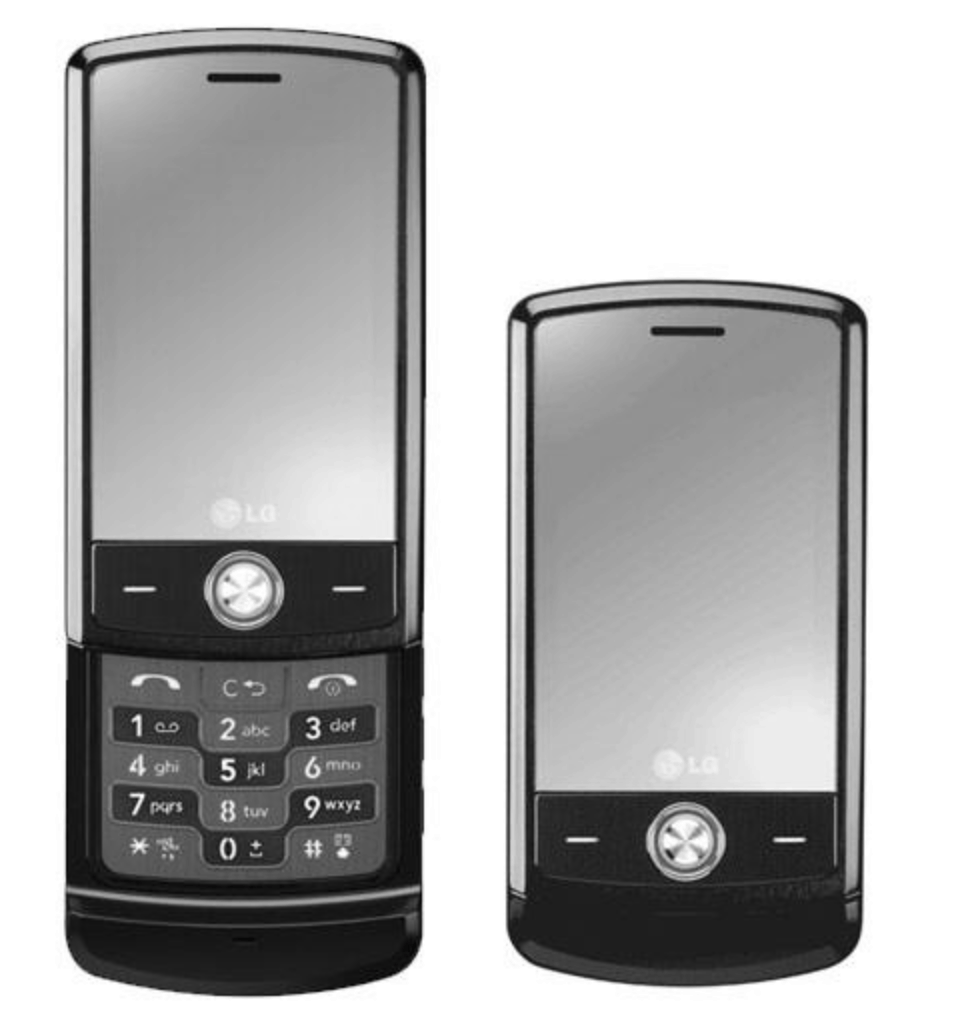
LG Glisten Features:
- Dimensions: 99.8 x 50.6 x 13.8mm
- Weight: 118g
- Operating system of rules: Java MIDP 2.0
- CPU: ARM9 115 MHz
- Memory: 50 Bachelor of Medicine Internal, microSD (TransFlash) extrinsic memory card one-armed bandit
- Bombardment: 800mAh Li-Ion
- Display: 240 x 320, 2.2-inch Reveal 262K-color TFT LCD
- Camera: 2.0 megapixels + Autofocus
2008 – Apple iPhone 3G
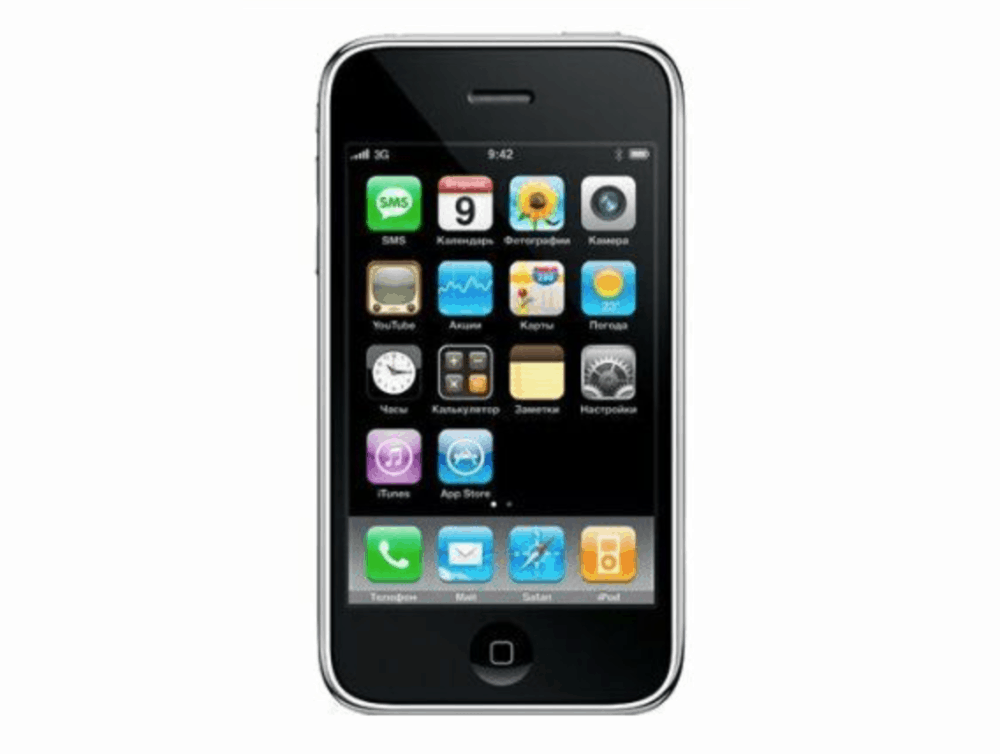
This one necessarily no introduction and is largely responsible for changing the face of the mobile space forever. Apple's iPhone popularised applications with millions of consumers, helped make touchscreen interfaces the norm, and broke new ground for overall design and finish.
The iPhone 3G was the sharpest tip of the mobile get, but from here on prohibited things would begin progressing flat faster.
2010 to 2022: The Android & iPhone Era
A good deal of things happened in the phone commercialize during 2010 and 2022. The first and nigh obvious thing was the ascension of Google's Humanoid platform; information technology went from a relative newbie in 2009 to the world's biggest cellphone operating system by 2022, destroying the previously superior operative systems in the grade of Symbian, BlackBerry, and Windows.
Symbian kind of died a expiry in a relatively short period of time, a death that coincided with the death of Nokia. The two things were related too; Android and iPhones did things differently. Populate liked how they did things, so more and more people affected away from Symbian.
Nokia died. And then came BlackBerry's obtuse and saddle-sore dying. The party's refusal to adapt to ever-changing market conditions combined with the great unwashe adjusting to original form factors for phones, likewise as things like apps flattering a affair, killed BlackBerry's market share within the space of a few age.
The company held happening, pushed new phones out, merely Eastern Samoa more than and more the great unwashe migrated away from BBM to WhatsApp, and Malus pumila's iPhone grew in prominence, BlackBerry's days as a musician in the phone space were o'er. The company's final stage-ditch attempt to recreate its fortunes was a brand new operating, BlackBerry 10, which barbarous flat on its face.
Blackberry bush finally yielded to market demands and incorporated Android into its phones but by this point, it had zip solicitation with consumers. Mass had moved on, either to Orchard apple tree or Samsung. BlackBerry flailed around for a trifle then called IT quits, switching to a licensing mint for its brand which was first undertaken by TCL.
Onward Mobility now has the BlackBerry permit and has claimed it will let go of the first 5G BlackBerry phone at some point during 2022.
We also lost a lot of other brands between 2010 and 2022. HTC died a bad impressive death, and then also did LG, one of the longest-regular speech sound brands in the Android ecosystem. Huawei grew chop-chop, almost catching Apple and Samsung, but was eventually articulatio genus-capped by the US government, losing nearly all of its market share in the distance of 24 months.
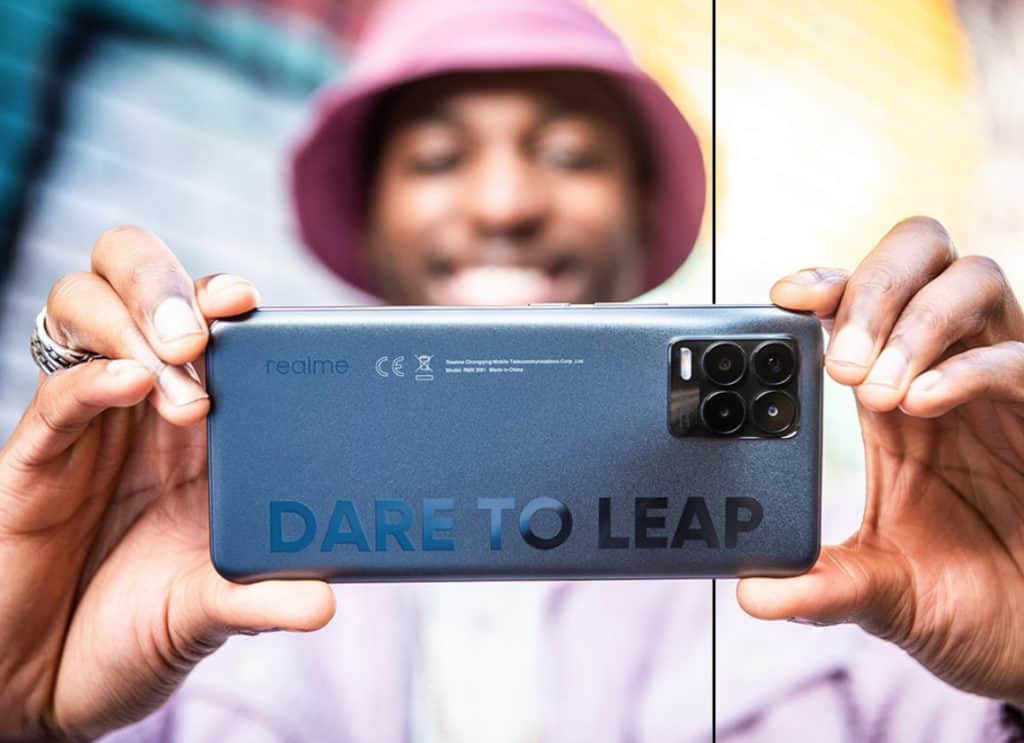
Malus pumila and Samsung in real time master the phone space. Merely it is smaller brands like OPPO, Xiaomi, RealMe, and VIVO that are growing the fastest. And this means, by 2023 or 2023, the biggest phone brand on the planet will probably no more longer be Samsung and Orchard apple tree. It volition glucinium a Chinese phone brand. Most likely matchless owned by BBK, so either OPPO, VIVO, or RealMe.
I wonder how things volition exchange between 2022 and 2030?
For more information connected our #1 picks for Apple's current best iPhone, check out our G uide To The Best iPhone (spoiler: IT's not the up-to-the-minute flagship model).
From Our Sponsors:
🖥 Save 40% on Refurbished MacBooks, iMacs, iPhones & iPads 🖥
Frequently Asked Questions
-
Q: What Was The Very First Cellular phone?
In 1983, Motorola free its first commercial cell, far-famed as the Motorola DynaTAC 8000X. The handset offered 30 minutes of talk-time, six hours secondary, and could stash awa 30 phone numbers pool. IT also toll £2639 ($3995).
-
Q: Who Made The First Cell Phone?
Motorola made-up and sold-out the archetypal-ever commercial smartphone. Named the Motorola DynaTAC 8000X, the handset was about the size of a brick, had only 30 minutes of shelling life, and cost a whopping $3995!
-
Q: What Year Did Cadre Phones Come with Out To The Public?
Motorola released the first "cellular telephone" in 1973 but IT wasn't until 1983 that the company's first proper versatile phone hit markets. The first phone, launched in 1973, was what is now called a 0G earpiece; it had no connectivity and was essentially a ii-right smart radio system.
-
Q: What Year Did Texting Start?
The technology behind text messages was developed past the Franco-European country GSM cooperation in 1984, however, the first actual textbook message was non dispatched until Dec 3, 1992. The guy who sent the content did so connected his computer and used the Vodafone net to fork up the message to a phone on the network. The message show: "Merry Xmas".
-
Q: What Was The Starting time Flip Phone Ever Made?
The first ever flip phone to be released commercially was the Motorola StarTac. Free in 1996, the StarTac was the first phone to feature this large-hearted of design. It was vastly popular and was the harbinger to Motorola's RAZR phone which went on to be the best-merchandising cell of all time.

Richard Goodwin has been functioning as a tech diarist for over 10 years. He is the editor and proprietor of KnowYourMobile.
When Did The Iphone 1 Come Out
Source: https://www.knowyourmobile.com/phones/the-history-of-mobile-phones-from-1973-to-2008-the-handsets-that-made-it-all-happen-d58/
Posted by: griffininlyrib.blogspot.com
0 Response to "When Did The Iphone 1 Come Out"
Post a Comment